


VRF Systems in Dubai, UAE
Traditional air conditioning systems either overwork or underperform. This is especially true in places like the United Arab Emirates, where high temperatures prevail for much of the year, directly creating cost and comfort problems. This is where VRF systems come in. Simply put, this technology "reads" the needs of each area in a building individually and adjusts the refrigerant flow accordingly. It works like smart energy management; it cuts unnecessary consumption and focuses on where it's needed.
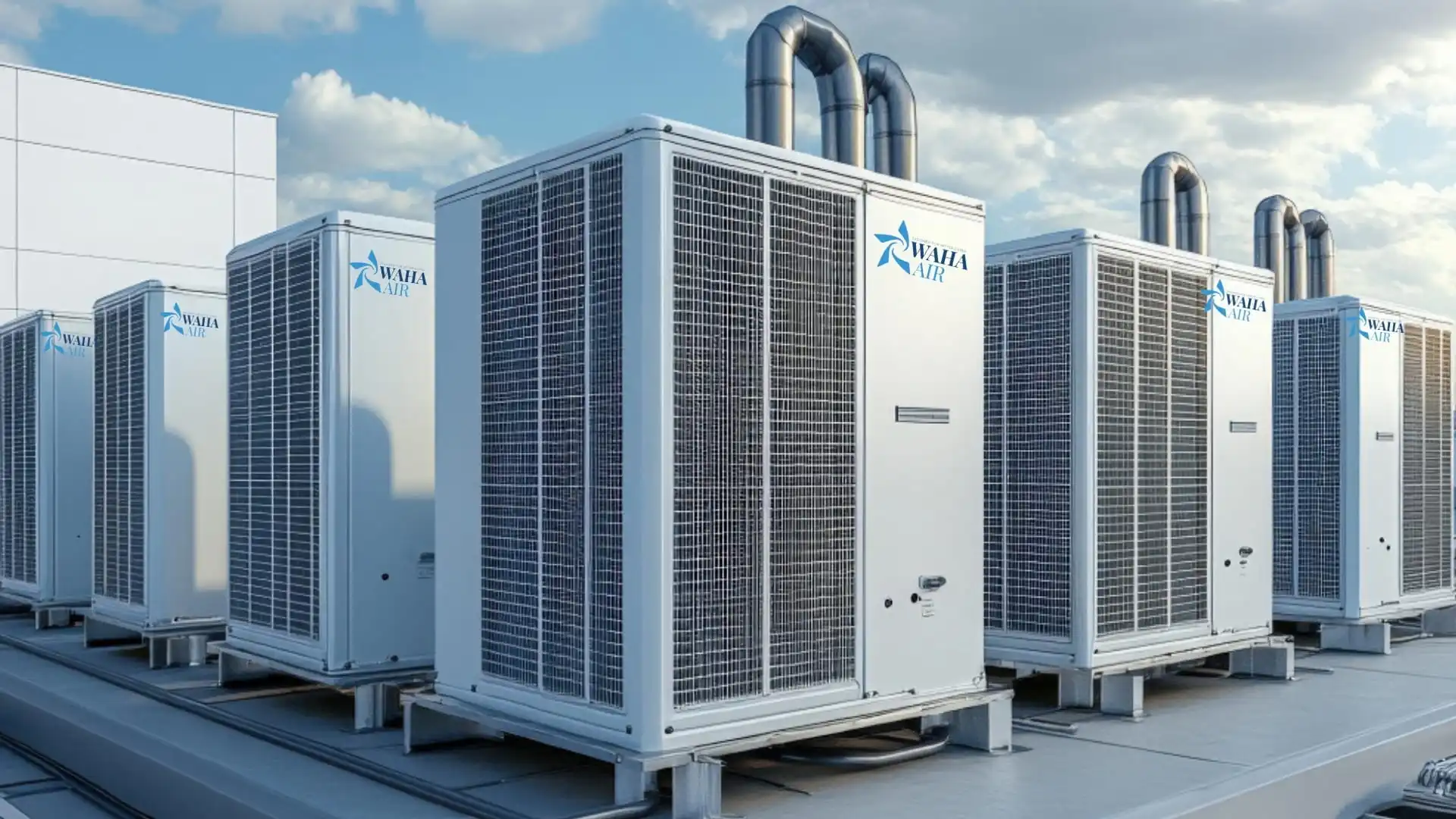
Now, let's look at what you need to know about VRF air conditioning systems from Waha Air.
What are VRF systems?
VRF (Variable Refrigerant Flow) systems are a highly efficient HVAC technology that precisely regulates airflow according to the instantaneous heating and cooling needs of different areas. Unlike traditional systems that operate at fixed capacity, it continuously optimizes its capacity according to the load; this means more stable temperature control and lower energy consumption.
It's basically a smarter version of air conditioning systems. Instead of delivering the same air everywhere, it adjusts itself according to the temperature of the area. One area might be cooler, another a little warmer... and the system handles this in the background.
How does a VRF system work?
A VRF system analyzes the temperature needs of each area in a building in real time and adjusts the amount of refrigerant accordingly. The outdoor unit, located at the center of the system, distributes the refrigerant to different indoor units via the pipeline. However, this distribution is not fixed; it is constantly rebalanced according to the needs of each area. Thus, while one area requires more cooling, another only receives the necessary level of energy.
The operating principle is demand-driven. The indoor units measure the ambient temperature and send a demand signal according to the value determined by the user. These signals determine the capacity of the outdoor unit. The inverter-controlled compressor activates and adjusts its speed according to the system load. Unnecessary energy consumption is prevented, and sudden temperature changes do not occur.
Benefits of VRF systems
VRF technology offers many advantages over traditional HVAC systems.
- Energy efficiency: The system uses only the necessary energy because it adjusts the compressor speed and refrigerant flow rate according to need.
- Customization: In VRF systems, each indoor unit operates independently, and different temperature needs can be met simultaneously in different areas. One section can be cooled while another is heated. This flexibility directly increases user comfort.
- Flexible design: VRF systems offer ease of application thanks to more compact components and minimal ductwork requirements. The low physical space requirement allows for easy integration of the system even in confined spaces.
- Less noise: VRF systems operate significantly quieter than traditional HVAC systems.
- Scalability: They can be adapted to different projects, from small residences to large commercial buildings.
- Cost: The initial investment cost in VRF technology may be higher than some traditional systems, but low energy consumption and reduced maintenance requirements offset this difference over time.
Types of VRF air conditioning systems in UAE
Although VRF systems appear to be a single technology, they actually have multiple operating models developed to meet different building needs. If the choice is incorrect, energy efficiency decreases; however, if chosen correctly, the system becomes almost self-optimizing.
Heat pump systems
This system heats or cools the entire building simultaneously. Two different modes cannot operate at the same time. Heat pump systems are used if all areas have similar temperature requirements.
For example, open-plan offices or standard residential projects... These are simpler systems and generally have lower initial investment costs.
Heat recovery systems
This system provides different climate control simultaneously in different areas. Energy is transferred from one area to another. In a heat recovery VRF system, simultaneous heating and cooling can be done in the same building; that is, the system can cool some rooms while simultaneously heating others.
In the United Arab Emirates, particularly in high-density areas like Dubai, Abu Dhabi, and Ras Al Khaimah, heat recovery VRF systems are widely preferred in hotels, large-scale offices, and mixed-use projects..
2-Pipe and 3-Pipe VRF systems
2-Pipe System: Operates on a single-mode principle. The entire building is heated or cooled simultaneously. It is more economical and simpler in structure, but the system does not allow different rooms to be heated or cooled simultaneously.
3-Pipe System: Allows heat transfer. The heat from one area can be used in another. Provides greater flexibility and control.
Water-cooled VRF systems
In regions with high temperature differences, such as the UAE, water-cooled VRF systems are also used. Using water-based cooling instead of air provides more stable performance, especially in conditions where the outside temperature is very high. This structure is preferred in projects with high thermal loads.
Hybrid VRF systems
These are systems that use both air and water-cooled structures. The aim is to achieve maximum efficiency under different conditions.
VRF system installation in UAE
VRF system installation in UAE is even more critical because the system operates almost year-round.
At Waha Air, the process usually begins with a detailed site analysis. It's not just about 'where the units will be placed,' but looking at the entire building. Sunlight exposure, room sizes, how the space is used... all of these affect how the system will be designed.
Then the outdoor unit is installed. This requires the correct airflow and the correct location, as it does most of the heavy lifting.
After that, the piping is laid. This part is crucial. The refrigerant lines run between the indoor and outdoor units and need to be clean, leak-proof, and the correct size. Even small mistakes here can affect performance later.
Then the indoor units are installed. These can be ceiling-mounted, wall-mounted, or concealed ducted units, depending on the design.
Once everything is connected, the system is tested. Pressure checks, leak checks, and then the system is commissioned.
And finally, the settings are configured. Each zone is calibrated so that the system responds correctly to different rooms.
Maintenance and lifespan of VRF systems in UAE
VRF systems in the United Arab Emirates are in constant use and require regular maintenance to ensure consistent performance, energy efficiency, and reliability.
Regular maintenance for VRF systems includes cleaning or replacing air filters, inspecting outdoor units, and having periodic system checks performed by HVAC professionals. These measures help prevent performance degradation, reduce energy consumption, and extend the system’s overall lifespan.
VRF systems in the UAE are expected to operate for many years; therefore, given the frequency and quality of use and maintenance, it is crucial that VRF systems are designed to function throughout their expected lifespan of 20 to 25 years. A maintenance program implemented as planned significantly extends the system’s lifespan.
Choosing the right VRF company in Dubai, Abu Dhabi and Ras Al Khaimah
Just as important as choosing a VRF system is who designs and implements it. A good VRF company in Dubai doesn't just offer you a system, they design it according to your space, analyze the building's needs, and shape the system accordingly.
Installation and post-installation are just as critical as the selection. VRF systems are not a standard "plug-and-play" solution. Therefore, instead of companies whose service scope is limited to sales, teams that also manage the installation and maintenance processes should be preferred.
The VRF company's experience is also a decisive factor here. A team that has completed similar projects before will notice small details that others might miss. In this context, Waha Air is a solution partner that has proven its technical expertise and application quality in the field with the projects it has completed. Price alone is not the evaluation criterion; the real value lies in the engineering approach and application discipline. To plan the right and sustainable VRF solution for your project, you can contact Waha Air and request a detailed analysis.
How much do VRF systems cost in Dubai, Abu Dhabi, and RAK?
Providing a fixed price for VRF systems is often misleading. This is because every project has its own unique dynamics. The size of the space, system capacity, brand selection, and installation details all directly influence the price of a VRF system. Therefore, proper budget planning begins with a clear analysis of system requirements.
The general price range for VRF systems in Dubai can vary between 20,000 AED and 50,000 AED.
VRF system prices in Abu Dhabi are generally on par with those in Dubai and may vary depending on the project. In Ras Al Khaimah costs are typically more balanced; however, this again depends on the scope of the application.
To determine the most suitable, efficient, and sustainable VRF solution for your project, contact Waha Air's expert team to take advantage of customized analysis and pricing benefits.
FAQs about VRF systems
How often do VRF systems need maintenance?
VRF systems require monthly filter cleaning, a quick system check every three months, and a full technical maintenance check once a year.
How do you know if a VRF system needs maintenance?
It rarely malfunctions without warning. You will usually notice early signs such as unusual operating noises, reduced airflow from indoor units, persistent odors, or uneven temperatures between different zones.
Can VRF systems clean themselves?
Some advanced VRF systems feature special coatings and automatic drying modes in the indoor units to reduce the buildup of dust and moisture. The system does not clean itself completely but significantly reduces the workload.
What maintenance tasks can the user perform themselves?
Filter cleaning can be done by the user. However, when it comes to refrigerant level measurement, leak detection, or coil cleaning, the situation changes. At this point, a professional team is required.
Does regular maintenance affect energy consumption?
Yes, VRF systems that receive regular maintenance deliver the same performance with lower energy consumption. In other words, the system isn't overworked, doesn't carry an unnecessary load, and this directly reflects on the bill.