


Data Center Cooling in the UAE
What is data center cooling?
Data centre cooling is the process to remove heat produced by servers and other IT equipment. The system controls the room at a safe temperature, prevents overheating and helps systems run reliably. The cooling is usually done using air, chilled water or liquid-based systems, depending on the size and design of the data center.
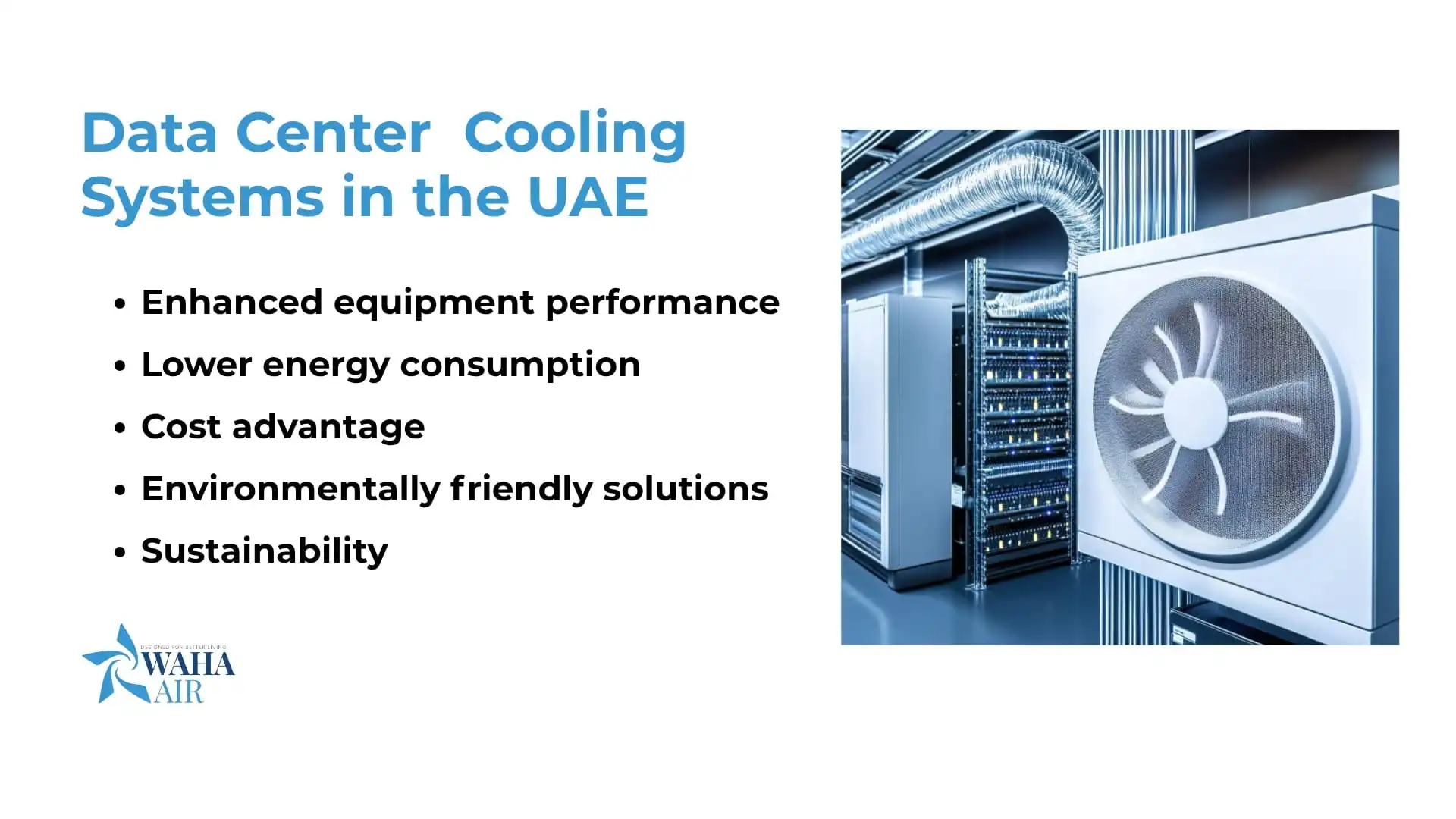
How do data centre cooling systems work?
The most important work of data centre cooling systems is to remove heat from servers and other equipment. In this system, warm air is collected, cooled through air conditioners, chilled water or liquid cooling. After cooling air is circulated back into the room. Sensors monitor temperature and airflow for best performance. If needed, the system can adjust cooling.
Types of data center cooling systems in Dubai, UAE
Different cooling systems in Dubai are available in practice depending on size, server density and local climate. Popular types are air cooling, liquid cooling and hybrid systems.
Data center air conditioning system in the UAE
In this system, cold air is used to remove heat from servers. Cooling units send chilled air toward the server racks, while hot air is collected and moved away from the equipment.
Many data centers separate hot and cold aisles to stop the two air streams from mixing. Air cooling is widely used and the most popular system. Because it is reliable and easier to use. However, this type cooling system generally uses more energy in large facilities or in hot climates such as the UAE.
Liquid cooling data centre systems in the UAE
Liquid cooling systems in the UAE removes heat by circulating water or a special coolant close to the servers. Since liquid carries heat more effectively than air, it cools high-performance equipment with less space and lower fan usage.
Using of cooling plates attached directly to processors is common for some systems. For others, servers are inside a non-conductive cooling liquid. Liquid cooling is especially useful for artificial intelligence systems, high-density servers and heavy computing workloads.
Hybrid cooling solutions in the UAE
Hybrid cooling works combining air and liquid cooling in the same data center. Air cooling is used for standard server racks, while liquid cooling handles equipment that produces more heat.
This approach allows existing cooling infrastructure to remain in use while supporting newer, more powerful servers. A hybrid system—often supported by a dedicated data centre chiller plant in Dubai, UAE—improves overall energy efficiency without requiring a complete redesign of the facility.
Key benefits of advanced data center cooling in the UAE
Advanced cooling systems protect equipment, diminish using of energy and help data centers operate more efficiently. The systems also make it easier to control powerful servers that produce high levels of heat.
Enhanced equipment performance & reliability
Servers work better when the temperature stays stable. Advanced cooling systems remove excess heat before it affects the equipment. This performance diminish overheating, sudden shutdowns and hardware problems.
Better temperature control also extends the life of servers and other components. The system can run heavy workloads for longer periods without losing performance.
Lower energy consumption and cost advantage
Cooling uses a large part of a data center’s electricity. An efficient system cools only the areas that need it. Sensors adjust airflow, water flow and cooling power according to the actual heat load.
Deploying an optimized data centre chiller plant in the UAE drastically reduces wasted energy and lowers electricity bills. It also reduces maintenance costs by minimizing heat-related stress on equipment.
Environmentally friendly solutions and sustainability
Modern cooling systems usually use less electricity and, in some cases, less water. This advantage reduces the data center’s carbon emissions and environmental impact.
Liquid cooling, smart controls and heat reuse makes the facility more sustainable. Some data centers also use the captured heat for nearby buildings or other operations.
Data centre cooling system companies in the UAE: Why Waha Air
Waha Air provides specialized data centre cooling services across Dubai and the broader UAE. The company designs, installs, and maintains cooling systems for data centres, server rooms, and critical IT facilities. Its capabilities range from CRAC and CRAH units to high-density rack cooling, liquid cooling for AI/GPU clusters, and turnkey data centre chiller plant in the UAE installations.
The company also installs N+1 backup systems. If one cooling unit fails, another unit takes over automatically. This helps protect servers from overheating and reduces the risk of unexpected downtime. Waha Air also uses BMS controls to monitor temperature, humidity and equipment performance.
Waha Air supports the full project process, from system design and installation to testing, maintenance and technical support. It also offers energy audits, smart sensors, VFD controls and chiller optimization to reduce unnecessary power use. These services make Waha Air a good option for businesses that need reliable cooling in the UAE’s demanding climate.
Data Center Solutions Catalogue
Download the full Waha Air data center cooling catalogue for detailed equipment specifications, cooling options and redundancy configurations.
FAQs
Why is data centre cooling important?
Servers create a lot of heat while they run. If that heat builds up, the equipment may slow down, stop working or become damaged. A good cooling system keeps everything at the right temperature and helps the data centre run safely without unexpected interruptions.
What are the best methods for data centre cooling in the UAE?
Air cooling, liquid cooling and hybrid systems are the best methods, as each can control heat effectively depending on the size, server density and cooling needs of the data centre.
How is cooling done in a data center?
Cooling systems send cold air or liquid toward the servers, collect the heat they produce and carry it away before the equipment gets too hot.
What is the best cooling system for a data center?
The best cooling system depends on the data centre, but liquid or hybrid cooling is often the better choice for high-density servers because it removes heat more efficiently.
What are the cooling components of a data center?
The main cooling components are CRAC or CRAH HVAC units, chillers, cooling towers, pumps, fans, air ducts, heat exchangers, pipes, cold plates, sensors and control systems.
How would you cool a server in a data center?
A server is cooled by sending cold air or liquid close to its hottest parts and carrying the heat away before it builds up.
Future trends in data centre cooling in the UAE
Data centres cooling system in the UAE will rely more on liquid cooling as AI servers become more powerful and produce more heat. Direct-to-chip systems will carry heat away from processors before it spreads through the server room. Hybrid systems will also remain common because many facilities still need air cooling for standard equipment.
Smart sensors and automated controls will adjust cooling according to the actual workload. This will reduce unnecessary electricity use. Water-saving systems, solar power and heat recovery will also become more important as operators look for practical ways to lower costs and improve sustainability in the UAE’s hot climate.